Introduction: Navigating the Tides of Economic Uncertainty with SaaS
The global economy is a dynamic entity, prone to cycles of growth and contraction. In this ever-shifting landscape, the subscription economy has emerged as a powerhouse, fundamentally altering how businesses and consumers access products and services. Characterized by recurring revenue models rather than one-time transactions, this paradigm has seen explosive growth, with companies like Netflix, Adobe, and Salesforce leading the charge. At its core, Software as a Service (SaaS) stands as a prime example, delivering critical applications via the cloud.
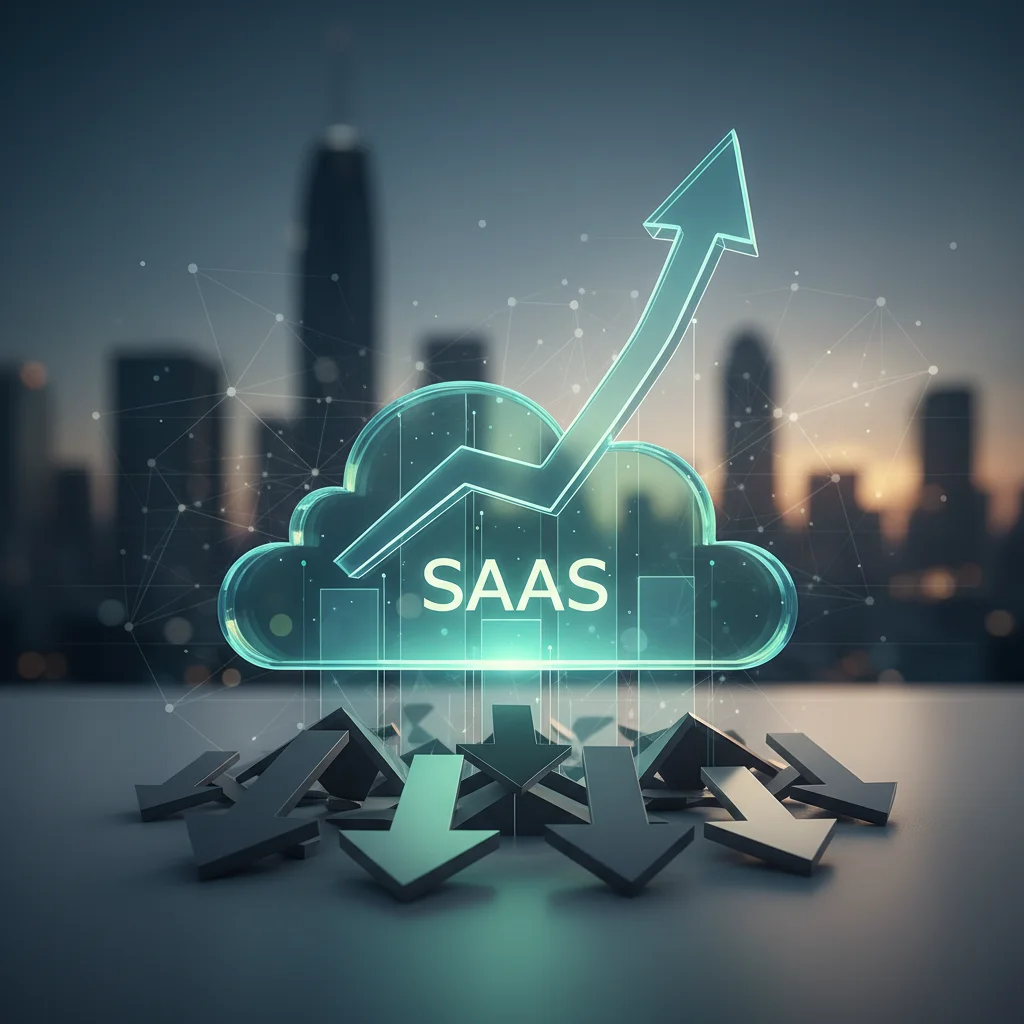
A key differentiator for SaaS, particularly in turbulent times, is its inherent SaaS economic resilience. This article will delve into why SaaS models are uniquely positioned to withstand and even thrive during economic downturns. We will explore the foundational strengths that underpin this resilience, outline strategic approaches for SaaS companies to fortify their positions, and uncover unique angles that highlight their indispensable role.
Businesses are increasingly turning to SaaS for stability in volatile markets. This shift isn’t merely about convenience; it’s a strategic move to secure operational continuity, manage costs effectively, and maintain agility when traditional models falter. Understanding the dynamics of SaaS economic resilience is crucial for both providers and adopters in today’s unpredictable economic climate.
The Inherent Strengths: Why SaaS Exhibits Economic Resilience
The robust nature of SaaS during economic headwinds isn’t accidental; it’s built into its very architecture and business model. Several intrinsic strengths contribute to its remarkable stability.
Predictable Revenue Streams
One of the most significant advantages of the SaaS model is its predictable revenue streams. Monthly Recurring Revenue (MRR) and Annual Recurring Revenue (ARR) provide a clear, forward-looking financial picture, a stark contrast to the lumpy, transactional revenues of traditional software. This predictability allows SaaS companies to better plan, allocate resources, and absorb shocks, fostering strong SaaS economic resilience. This consistent income stream is invaluable for investor confidence and operational stability.
Cost-Efficiency and Scalability
During economic contractions, businesses scrutinize every expenditure. SaaS shines here by reducing upfront capital expenditure (CapEx) for software and infrastructure. Instead, it converts these costs into manageable operational expenditures (OpEx). This model allows businesses to scale their software usage up or down based on immediate needs, paying only for what they consume. This flexibility is crucial for budget-conscious companies looking to optimize spending without sacrificing essential tools.
Value Proposition: OpEx vs. CapEx Benefit
The shift from CapEx to OpEx is more than an accounting trick; it’s a strategic financial advantage. Businesses can avoid large, one-time investments in software licenses, servers, and maintenance. This frees up capital that can be deployed elsewhere, making SaaS a more attractive and accessible option, particularly when capital is scarce. This financial agility directly contributes to a company’s ability to navigate economic pressures.
Essential Services
Many SaaS solutions provide mission-critical functions that businesses simply cannot afford to cut, even during severe budget tightening. Customer Relationship Management (CRM) platforms, accounting software, communication tools, and project management systems are often the backbone of daily operations. Disrupting these essential services would lead to greater costs and inefficiencies, making their SaaS subscriptions “sticky” and indispensable. This inherent necessity underpins much of the SaaS economic resilience.
Continuous Innovation & Updates
SaaS providers continuously innovate and update their platforms, delivering new features, security enhancements, and performance improvements without additional cost to the user. This ongoing value proposition ensures the software remains relevant and competitive. Customers benefit from always having access to the latest technology, enhancing long-term retention and perceived value, even when budgets are tight.
Data-Driven Insights
Modern SaaS platforms are rich in data, offering powerful analytics that help businesses optimize operations, identify inefficiencies, and pinpoint cost savings. From understanding customer behavior to streamlining internal workflows, these insights empower businesses to make informed decisions. This ability to drive efficiency and uncover value further solidifies the essential role of SaaS solutions, reinforcing their resilience.
Strategies for SaaS Companies to Fortify Resilience During Downturns
While the SaaS model possesses inherent strengths, proactive strategies are essential for companies to maximize their SaaS economic resilience during challenging times. These approaches focus on strengthening customer relationships, optimizing internal operations, and adapting product offerings.
Focus on Customer Retention & Churn Reduction
During downturns, retaining existing customers becomes paramount, as new customer acquisition often slows. SaaS companies must prioritize customer success, offering proactive support, robust onboarding, and clear demonstrations of Return on Investment (ROI). Tools like customer success platforms and regular check-ins help identify at-risk accounts early. As Zuora.com highlights, “the subscription model thrives on customer relationships, making retention critical.”
Value-Based Pricing & Tiered Offerings
Pricing strategies need to be flexible yet value-driven. Offering tiered plans allows customers to choose options that align with their current budget constraints while still receiving essential functionality. Companies might introduce “lite” versions or offer temporary discounts for struggling clients, ensuring they remain customers. This adaptability helps maintain perceived value and reduces churn.
Product-Led Growth (PLG) & Efficiency
Product-Led Growth (PLG) strategies, where the product itself drives user acquisition, activation, and retention, become even more critical. By making the product intuitive and valuable from the first interaction, SaaS companies can reduce reliance on expensive sales and marketing efforts. This efficiency in customer acquisition and onboarding directly contributes to stronger margins and resilience.
Diversification of Customer Base
Over-reliance on a single industry or a few large clients can be perilous during an economic slump. Diversifying the customer base across various sectors and company sizes mitigates risk. If one industry is hit hard, others may remain stable, providing a buffer against significant revenue loss. This broad appeal strengthens overall SaaS economic resilience.
Operational Efficiency & Cost Management
SaaS companies must also look inward, optimizing their own spending and resource allocation. This includes scrutinizing marketing spend, streamlining development processes, and leveraging automation to reduce operational costs. Maintaining lean operations ensures that the company can weather reduced revenue growth without compromising core services. GlobalBankingAndFinance.com emphasizes that “efficient operations are key to navigating economic headwinds.”
Innovation with a Purpose
Innovation should be strategic, focusing on features that directly address customer pain points exacerbated by economic pressures. This might include developing new cost optimization tools, enhancing automation capabilities, or providing deeper analytics for efficiency gains. Such purposeful innovation reinforces the value proposition and strengthens customer loyalty.
Building a Strong Community
Fostering a vibrant user community provides multiple benefits. It offers a platform for peer-to-peer support, reduces the burden on customer service, and generates valuable product feedback. A strong community also increases customer loyalty and creates a sense of belonging, making customers less likely to churn during difficult times.
Unique Angles: Beyond the Obvious – Unlocking Deeper SaaS Resilience
Beyond the well-understood advantages, several less obvious factors contribute to the profound SaaS economic resilience, embedding these solutions deeply within the fabric of modern business.
The ‘Stickiness’ Factor: Embedding SaaS into Core Business Processes
SaaS solutions often become deeply integrated into a company’s core operational processes. From CRM systems managing sales pipelines to ERP solutions handling finance and supply chain, these platforms are not easily replaced. The cost and disruption associated with migrating data, retraining staff, and re-establishing workflows create a significant “stickiness” factor, making them indispensable even when budgets are tight.
Ecosystem Play: How Partnerships and Integrations Create a More Robust Offering
SaaS providers that build strong ecosystems through partnerships and integrations with other platforms create a more comprehensive and essential offering. When a SaaS solution seamlessly connects with a company’s existing tech stack – be it accounting software, marketing automation, or communication tools – its value multiplies. This interconnectedness makes the entire system more robust and harder to dismantle, further solidifying its presence.
The Human Element: How SaaS Frees Up Human Capital for Higher-Value Tasks
In times of economic pressure, businesses often scrutinize labor costs. SaaS platforms, through automation and streamlined workflows, free up human capital from repetitive, low-value tasks. This allows employees to focus on strategic initiatives, innovation, and customer engagement – activities that drive growth and competitive advantage. This ability to optimize human resources is a critical, often overlooked, benefit.
Agility and Adaptability: SaaS Platforms’ Inherent Ability to Adapt
The cloud-native architecture of SaaS platforms grants them inherent agility. Providers can quickly deploy updates, introduce new features, and adapt to changing market conditions or regulatory requirements. This rapid adaptability translates to a competitive advantage for their users, allowing businesses to pivot quickly and respond to new challenges, a crucial capability during volatile periods. WorldFinance.com notes that “agility is a hallmark of successful businesses in uncertain times.”
The Data Advantage: Leveraging Aggregated Data for Proactive Adjustments
SaaS providers collect vast amounts of anonymized, aggregated data on user behavior and industry trends. This data can be leveraged to identify macro trends, predict emerging needs, and proactively adjust product offerings. By understanding the collective challenges faced by their customer base, SaaS companies can develop solutions that benefit all users, enhancing their collective resilience and value proposition.
Sustainability & ESG Alignment: Contributing to Environmental Goals
Many cloud-based SaaS solutions inherently contribute to sustainability efforts by reducing the need for on-premise hardware, energy consumption, and physical infrastructure. This alignment with Environmental, Social, and Governance (ESG) goals can be a significant differentiator. For conscious businesses, even during downturns, choosing environmentally responsible solutions adds another layer of value and appeal.
Conclusion: Sustaining Growth and Leadership in the Evolving Economy
The subscription economy, particularly through the lens of SaaS, has proven to be a beacon of stability and growth amidst economic uncertainty. Its inherent strengths – predictable revenue, cost-efficiency, and the provision of essential services – create a powerful foundation for SaaS economic resilience. Furthermore, strategic approaches focused on customer retention, value-based pricing, and operational efficiency allow SaaS companies to not only survive but thrive.
The unique angles discussed, from the “stickiness” of deep integration to the strategic deployment of human capital and the agility of cloud-native platforms, underscore the profound and often understated ways SaaS contributes to business stability. SaaS is not merely a software delivery model; it is a critical enabler of resilience for its customers, empowering them to navigate challenges with greater agility and efficiency.
Looking ahead, the importance of SaaS in a world of increasing volatility will only continue to grow. As businesses seek greater predictability, flexibility, and value, SaaS will remain an indispensable partner. By leveraging these insights, SaaS companies can solidify their position as essential partners in any economic climate, ensuring sustained growth and market leadership for years to come.